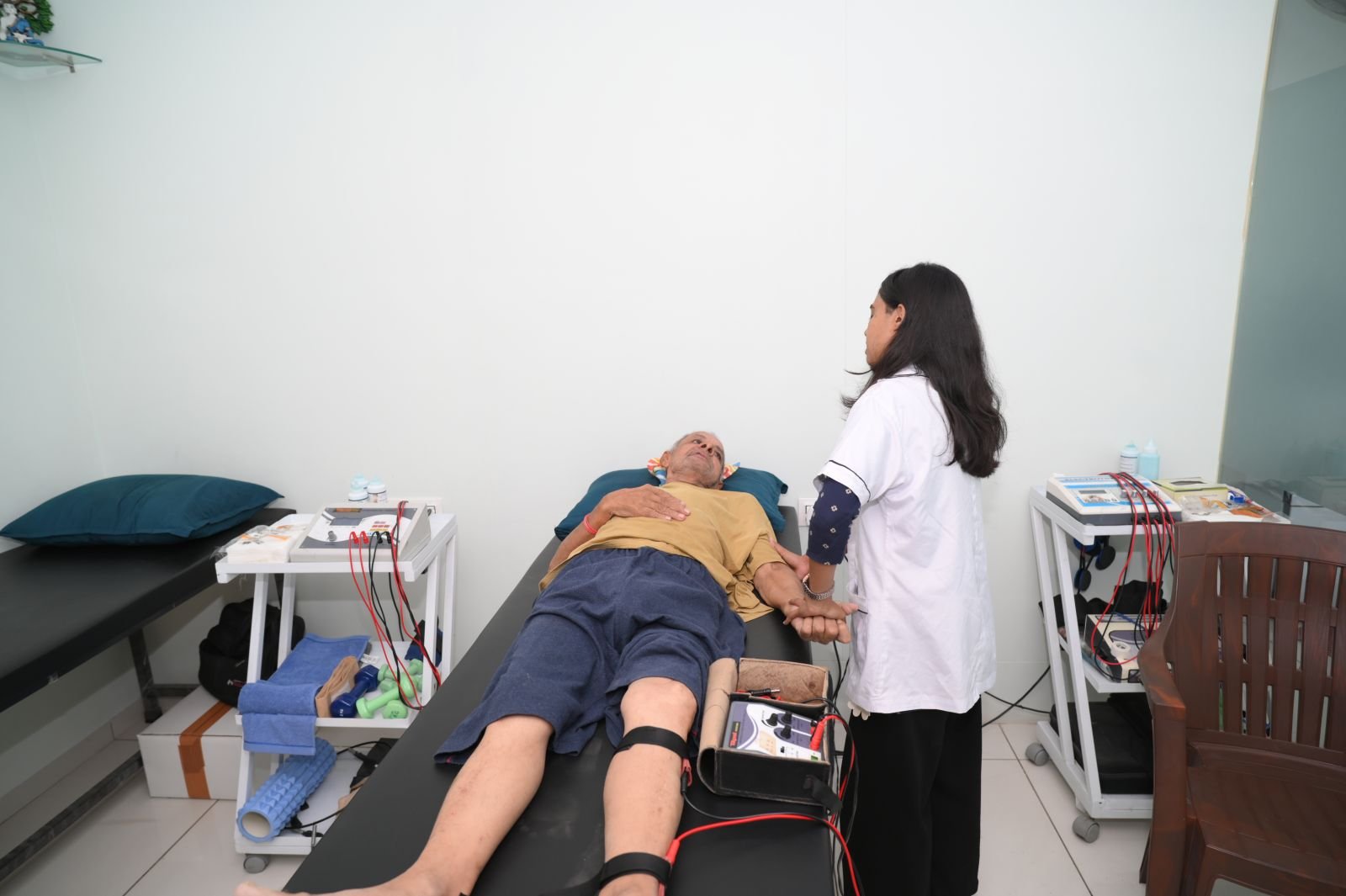
When a plaster comes off or stitches are removed, many patients expect to be back to normal. But weeks of rest leave joints stiff and muscles weak. This is where physiotherapy makes the difference between a good recovery and long-term problems.
What physiotherapy does
- Restores the range of movement in stiff joints
- Rebuilds muscle strength lost during rest
- Improves balance and walking, reducing the risk of falls
- Controls swelling and pain
- Helps you return to work, sport and daily activities safely
After joint replacement
After knee or hip replacement, physiotherapy usually starts within a day or two. Early movement prevents stiffness and blood clots, and helps you walk, climb stairs and sit comfortably again.
How long does it take?
It depends on the injury, your age and how regularly you exercise. A simple wrist fracture may need a few weeks, while a knee replacement may need two to three months of guided rehab.
Tips for a faster recovery
- Do your home exercises every day, not only on clinic days
- Tell your therapist about pain or swelling after sessions
- Keep follow-up visits with your orthopaedic doctor
At Rudram, orthopaedic care and physiotherapy are under one roof, so your doctor and therapist plan your recovery together.