
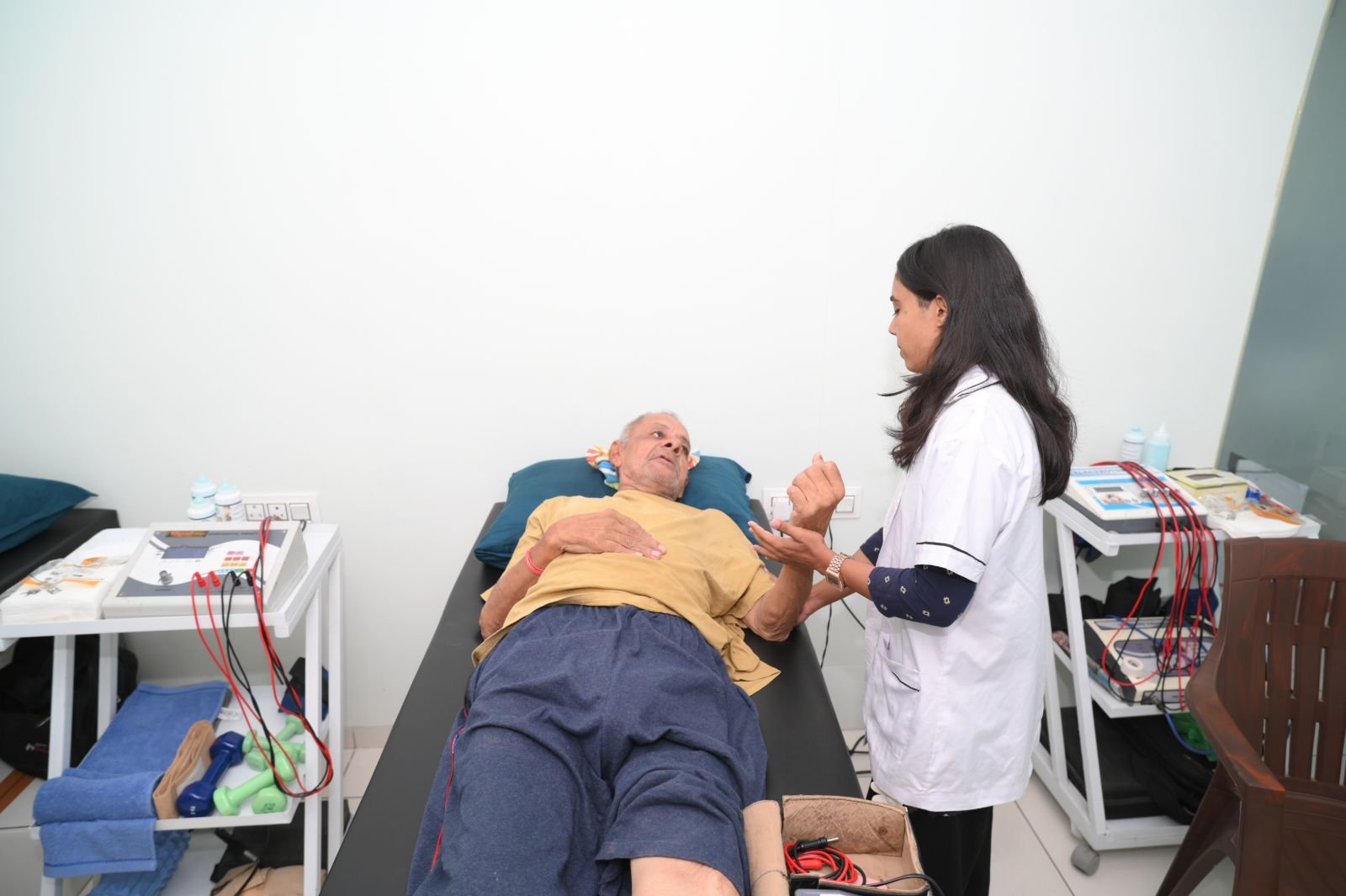
Frozen shoulder (adhesive capsulitis) happens when the capsule around the shoulder joint becomes inflamed, thick and tight. It is more common between 40 and 60 years of age and in people with diabetes or thyroid problems.
The three stages
- Freezing: pain gradually increases and movement starts to reduce
- Frozen: pain may ease a little but the shoulder is very stiff
- Thawing: movement slowly returns
Without treatment the whole cycle can take one to two years. With timely treatment most patients recover much faster.
Treatment options
- Medicines for pain and inflammation
- An injection into the shoulder joint in suitable cases
- Physiotherapy: heat therapy, joint mobilisation and guided stretching
Simple home exercises
- Pendulum swing: lean forward with support and let the arm hang and swing gently in small circles
- Finger walk: face a wall and walk your fingers up the wall as far as is comfortable
- Towel stretch: hold a towel behind your back with both hands and gently pull upward with the good arm
Exercises should cause a gentle stretch, not sharp pain. Your physiotherapist will tell you how many repetitions are right for your stage.